I went to Toronto because of the density. Over the last few years, I’ve been lucky enough to meet some genuinely smart and kind people who call the city home, and I’d spent a lot of time observing from a distance: how the community evolved, which moments mattered, who left and who stayed. Toronto talks about brain drain constantly, and I’m sure that’s real, but the abundance of cracked people still living in the GTA is evidence of the total talent the region produces. If no one ever left, it would be too OP.
The noticing started on day one.
I walked into my first conversation with the Falcon team not fully understanding why they were moving the way they were moving. Every other design tool is shipping at an insane rate, and Falcon GX does one thing that nobody can even label yet. By the end of my time with them things were clear. Our capacity to design is downstream of the tools we have available, and new tools breed new constraints, and new constraints breed new designs. Falcon is accelerating design by creating entirely new instruments for designers to express themselves. That’s going to be awkward and illegible for a while, and that awkwardness is the point. Ahmed mentioned that he doesn’t really pay attention to trends and competitors. They’re reading old books, digging into great design from other domains of the past. You can’t build a lasting moat by shipping faster on the same rails as everyone else.
Later I pulled up to New Stadium to meet Vin and the crew. Those guys work hard, love what they do, and are unapologetically themselves. The conversation I had with Vin didn’t go how I expected, and I learned things I wouldn’t have anticipated. The big one, which Vin has been developing publicly since his “Yours to Discover” talk last year, is that “worldbuilding” has very little to do with imagining what could exist in a vacuum, and everything to do with actively engaging with what is and then pushing the boundaries of it. If you want to change your city, you have to embed yourself in it. You have to understand the people, the history, the culture. The research matters more than the imagination, not because imagination is unnecessary, but because genuine imagination is what happens when you open your eyes to what’s already in front of you.
I started viewing the rest of the trip through this lens. In Islam, Allah tells us to reflect on his signs, to consider the wonder and the reasons behind all things. These instructions extend into work, into community, into the question of what a city is actually producing and why.
The next day I met Ben Parry, who was intensely kind and erudite. The man is clearly well-read, and his energy in the conversation never made you feel the distance that kind of knowledge could create. Ben is building a genuinely intellectual community in Toronto, and I left with a lot to sit with about what that looks like when it works. I later went on a long walk with Sarim Malik, who was kind enough to give me the run down of different neighborhoods, parks, and fruity lattes across the city.
Somewhere in between all of this, I read a reflection from Jackson Dahl’s podcast with Henrik Karlsson. Karlsson, drawing on Nick Cave, argues that we ought to flip the direction of our introspection from object to subject. The blocked creative, he says, is the one asking “who am I?” and waiting for some inner voice to reveal a stable truth. Cave asks a different question: who am I in relation to this song, this book, this tour? The questions are oriented outward, toward the work and the world, and they turn out to be far more answerable. Karlsson started filling his notebook with things he read, things his kids did, things that happened in nature and in conversation. He stopped trying to know himself as an object and started attending outward.
This is what the people reshaping Toronto are doing.
Ahmed told me that the “Neo Toronto” logo is actually the old logo of Toronto, and once you see it you can’t unsee it. Most people he talked to had no idea what it was. I thought it was a Falcon thing the entire time. But they noticed it, and they built from a place of noticing, from attending outward to what was already there before they put anything new on top of it. Vin mentioned that his tweets are often just a way to capture signal. How do people respond to this? What does their response tell me? What can I learn from it? When I told Ahmed I was coming to town, he just planned things around the trip so I could meet interesting people. I joked that he had me in the Falcon sweatshop, but the real thing he was showing me is his posture toward the city: this place is full, let me show you what it holds.
So I came home asking a different question.
Chicago has its own version of this logo, and almost no one knows it. The Municipal Device is a Y-shaped symbol set inside a circle, introduced in 1892 through a Chicago Tribune contest and enshrined in the city’s municipal code in 1917 alongside the flag. It was designed for public use, intended to show civic pride, and then almost entirely forgotten once the flag became the dominant symbol of the city. It’s been on buildings and floors and seals this whole time. Most Chicagoans have walked past it a thousand times without registering what it is.
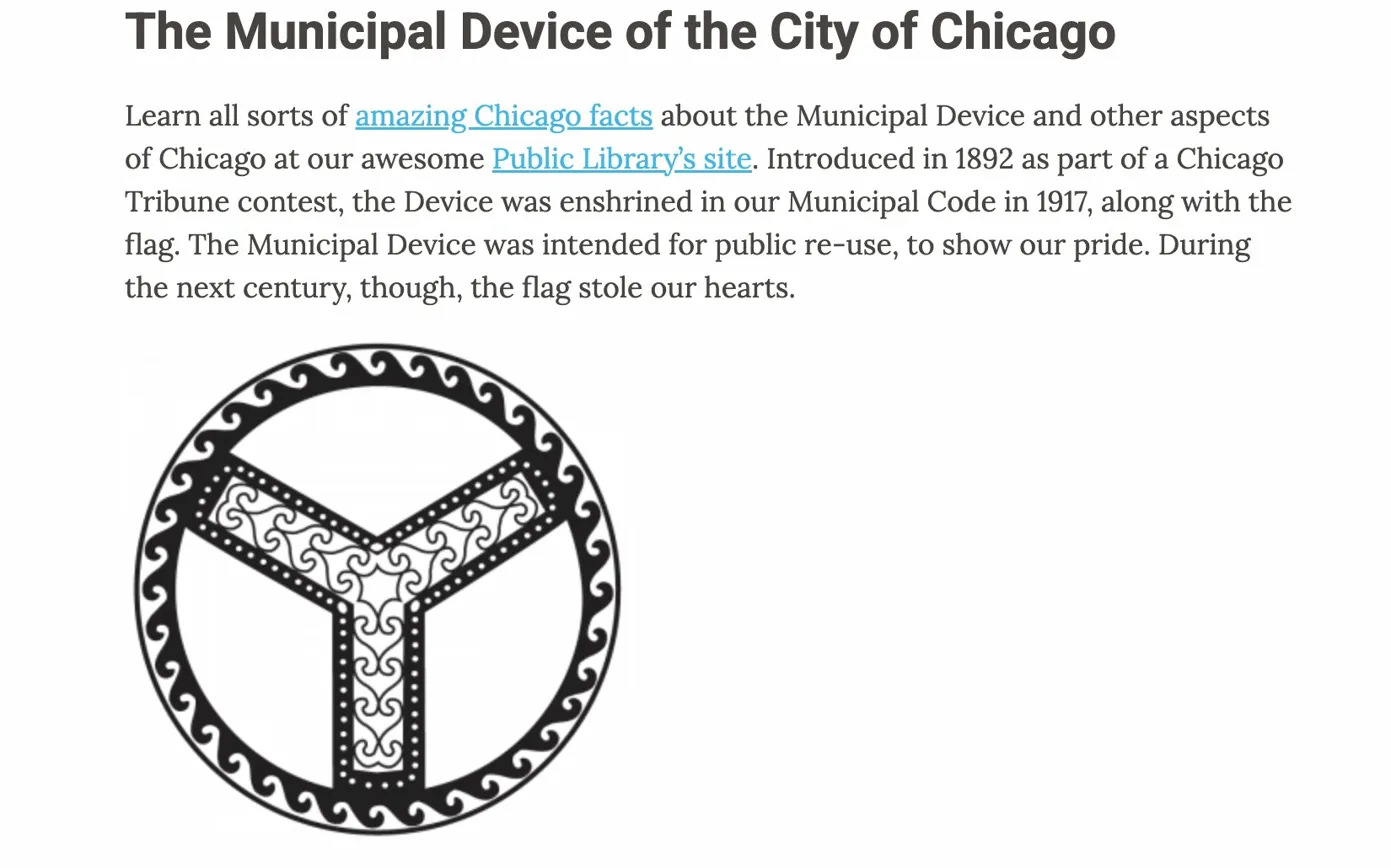
On the plane home, I looked it up because I wanted to find Chicago’s equivalent. I found the Device, and then I found a photograph of it rendered in mosaic tile in a pattern I recognized immediately, because it’s almost identical to the tilework we use in Native’s visual identity. I hadn’t made that connection before. The thing I was using to represent this studio had roots I hadn’t traced, sitting in plain sight on the floors of buildings I’ve probably walked through.
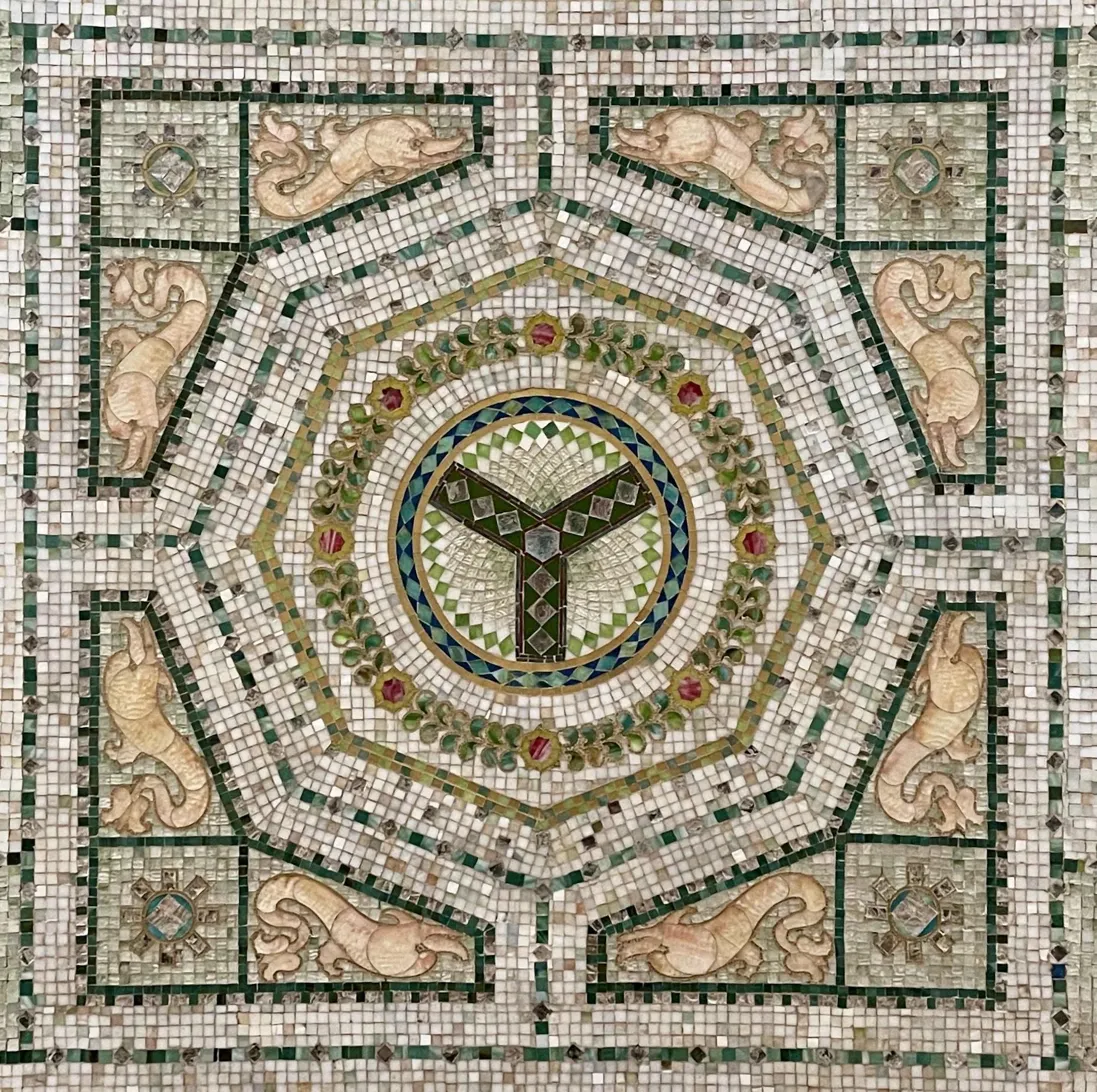
This is what I mean when I say I don’t look up.
What am I noticing in Chicago? What is already here that I haven’t looked at closely enough? What are the old logos I’ve been walking past? What are the communities forming that I don’t have names for yet? Who is doing quiet, serious work that the city hasn’t recognized?
Nur House exists because we believed Chicago had the people but no home for Muslim professional ambition. I still believe that. But belief isn’t the same as attention, and I think I’ve been operating on belief more than observation. The work I need to do is to slow down and look at what’s in front of me, to understand what Chicago is already producing and why, to notice before I build.
The research is more important than the imagination. The imagination follows when you finally open your eyes.